Computational Making in Public-School Classrooms at Scale
A year-long deployment of computation-based Making in authentic science classrooms and a 340-hour video analysis of how students actually connect science, Making, and code together.
Project Overview
Adding computation to hands-on "Making" is a powerful way to teach science - a 3D-printed model becomes dynamic and interactive when an Arduino and code drive it. But almost nobody had studied whether this works in ordinary public-school classrooms at real scale, where curriculum standards, logistics, and hundreds of students come together. Our program did exactly that, for a full year, across every 5th- and 6th-grade science class in a school.
My role. Within a large (69 members) multi-team program, I led the research strand as first author on two papers: the retrospective Design-Based Research analysis of what it takes to deploy computation-based Making at scale, and a 340-hour video analysis of how students actually make interdisciplinary connections. I owned the research questions, coding schemes, and synthesis into design implications.
The impact. The work delivered the field’s first comprehensive account of at-scale computation-based Making in authentic classrooms: four systemic challenges that any scaling effort must design around, and a video-grounded model of how (and how rarely) students link science, Making, and code. These findings directly shaped the program’s year-two iteration and offer a reusable playbook for schools and ed-tech teams.
The Challenge
Piloting a maker activity with a handful of motivated kids tells you little about running it for 442 students inside a mandated curriculum. Computation raises the difficulty further: students juggle science concepts, physical building, and programming at once, and teachers rarely have all three. The challenge was to make computation-based Making survivable and effective in the constraints of real classrooms - and to understand where the intended learning connections actually form.
Core questions we needed to answer
- What does it actually take to deploy computation-based Making across a whole grade for a year?
- What challenges impact the sustained, curriculum-aligned use of computation-based Making?
- What types of connections do students make across science, Making, and computation?
- In what contexts do those interdisciplinary connections emerge?
Methodology
Because the goal was to improve a real, evolving intervention rather than test a fixed hypothesis, we grounded the program in Design-Based Research - iterative cycles of design, deployment, and reflection in the live setting. Different components (Maker kits, mentor corps, organization) iterated on different clocks. For the learning question, I paired this with fine-grained video interaction analysis.
Design-Based Research at program scale
Why Authentic classrooms are too dynamic for a controlled trial; DBR is built for improving practice in messy, real-world settings through iteration and practitioner collaboration.
How Coordinated iterative cycles across specialized sub-teams (fabrication, curriculum, mentors, a custom block-based programming interface, and research), refining curriculum-aligned maker kits and week-long lesson plans between interventions and capturing organizational lessons for the next year.
Curriculum-aligned activity & lesson design
Why To be adoptable, activities had to map onto what teachers were already required to teach.
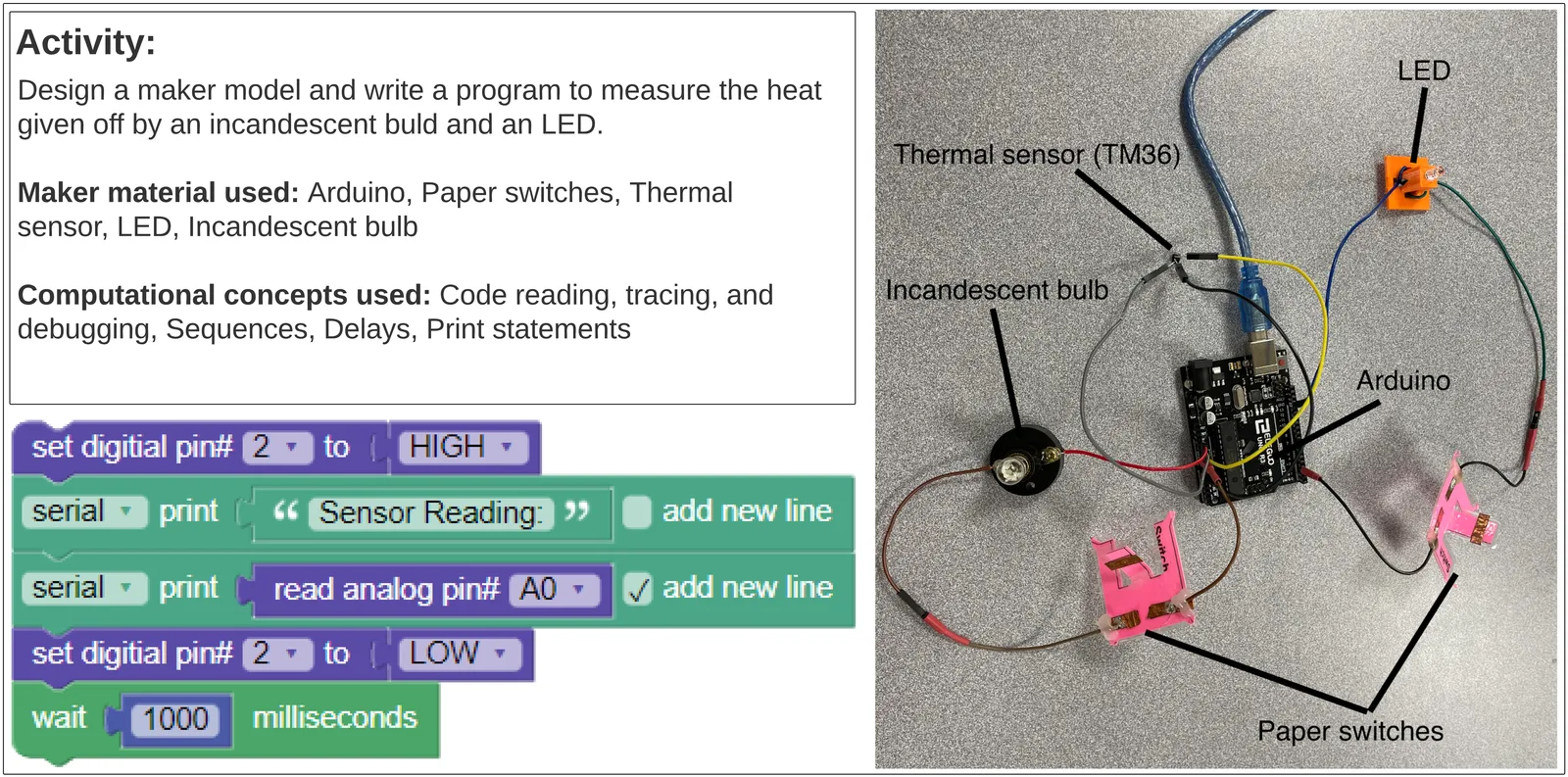
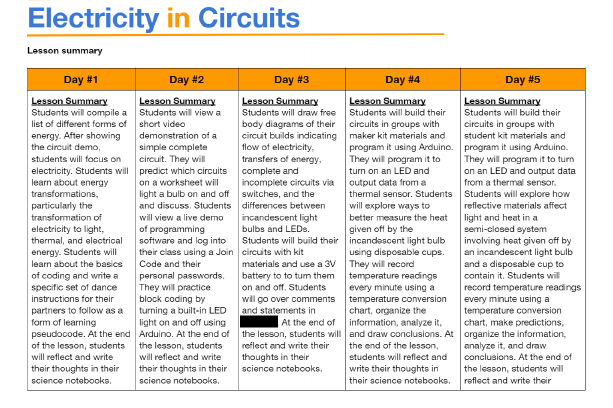
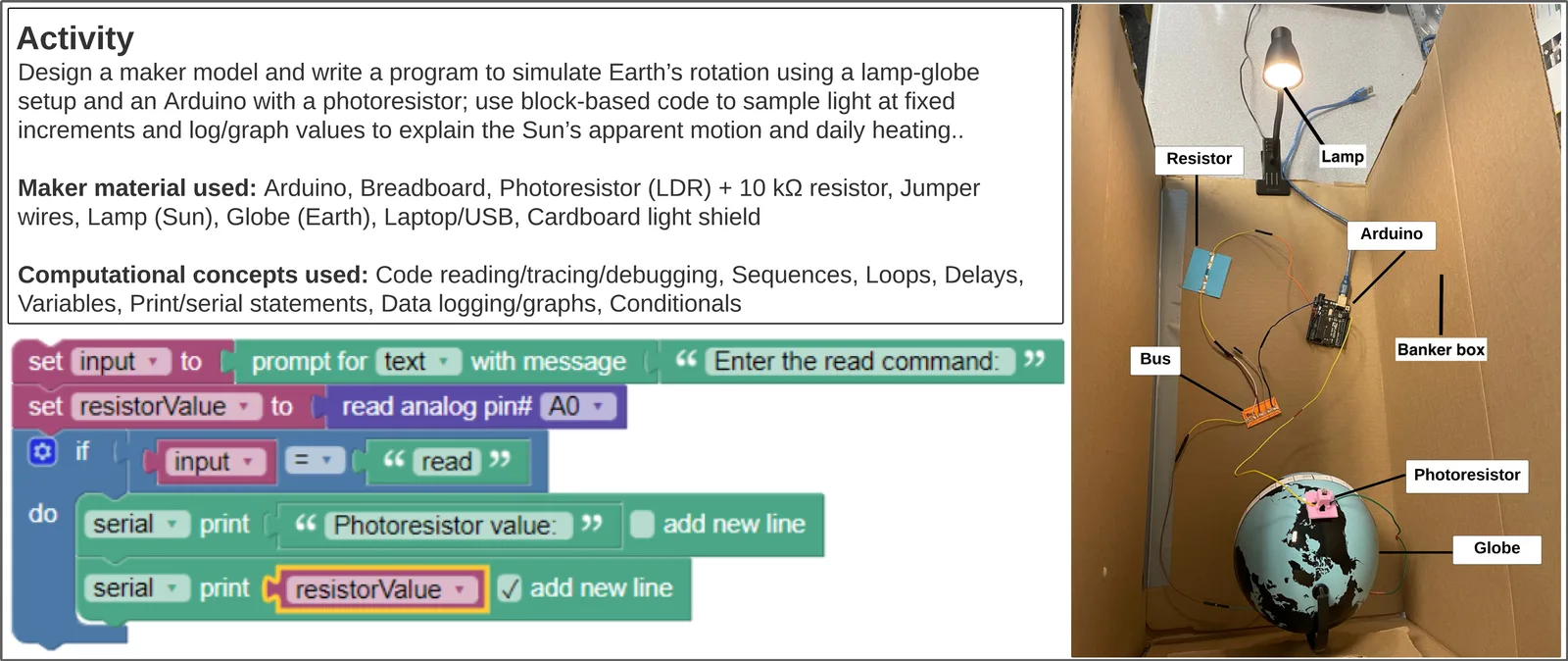
How Co-designed activities with teachers around existing science units (e.g., Electricity in Circuits, Movement of the Sun), each pairing a physical build, block-based code, and target science concepts into structured multi-day lesson plans.
340-hour video interaction analysis
Why Self-report can’t reveal the micro-moments where a student links a science idea to a wire or a line of code. Video captures interdisciplinary connections as they happen.
How Analyzed ~340 hours of classroom video, building a Knowledge×Application linkage model across science, Making, and programming; two coders identified 68 connection excerpts and coded both the linkage type and the context that produced it (Cohen’s κ = 0.72 and 0.80 - substantial agreement).
Key Insights & Artifacts
Scaling surfaced four systemic challenges - the design brief for at-scale Making.
Across the year, four challenges recurred: striking a workable balance between science, Making, and computational thinking; making the connections between those disciplines explicit to students; the sheer organizational and operational overhead (kit logistics, device reliability, mentor coordination); and delivering the designed lesson plans with fidelity in unpredictable classrooms.
Decision These four become the requirements any school or ed-tech team must budget for up front - the program’s value is as much in operational design (logistics, mentor training, kit robustness) as in the learning activity itself.
Students’ connections were lopsided - computation stayed invisible unless made tangible.
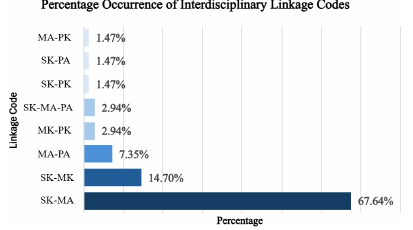
The dominant connection by far was science-knowledge to Making-application (≈68% of coded moments): students readily used science ideas to guide hands-on building. Programming-related links were rare and fragile, surfacing mainly when computation was anchored in something observable (an LED turning on, a sensor reading) or explicitly prompted by a mentor.
Decision If computation isn’t designed into visible, tangible touchpoints, it recedes into abstraction and the intended learning connection never forms - a direct implication for activity design and for where mentors should intervene.
Hands-on, embodied activity is what actually produces the connections.
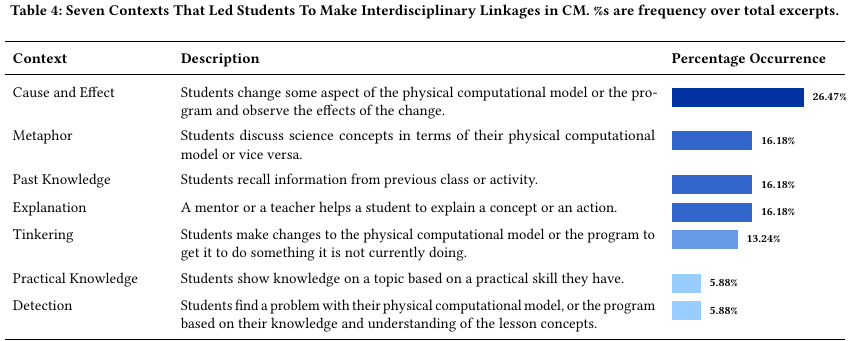
Coding the contexts behind connections showed they were driven by physical, embodied engagement: cause-and-effect experimentation (the single largest context), tinkering, and embodied metaphors (students reasoning about their circuit as a model of a concept) - often catalyzed by a mentor’s well-timed question.
Decision Design should deliberately engineer these moments - tangible cause-and-effect, room to tinker, metaphor prompts, and trained mentors - rather than assume connections emerge on their own; without scaffolds, opportunities are easily lost.
Impact & Learnings
How the team applied the findings
The retrospective lessons and the video-grounded connection model fed straight into planning the program’s second year - reshaping kit design, mentor training, and where computation is surfaced in each activity.
- First comprehensive, documented account of at-scale computation-based Making in authentic public-school classrooms.
- Four systemic scaling challenges named and evidenced - a reusable checklist for schools and ed-tech teams.
- A validated interdisciplinary-linkage model (κ = 0.72-0.80) plus seven contexts that produce connections.
- Concrete design implications: make computation tangible, engineer cause-and-effect moments, and equip mentors to prompt cross-discipline talk.
What I learned
At scale, the intervention is only half the product - logistics, device reliability, and mentor capability determine whether the learning design ever reaches students intact. I also learned how easily the "computational" half of computational Making disappears: unless code is tied to something students can see and touch, they simply route around it.
What I would do differently
I’d surface computation earlier and more visibly in each activity, front-load mentor training specifically on facilitating cross-discipline talk (since mentor prompts were a key trigger for the rarest connections), and instrument activities for learning outcomes so we could tie specific design choices to measured understanding, not just observed connections.